One of the biggest drawbacks to resin printing is using IPA (and other solvents) to clean prints. For those that use different resins with different pigments, swapping between can leave behind residue that may or may not ‘stain’ lighter colored prints.
I recently switched to the Form 4 after using the Prusa SL1S for a number of years, and one of the handy accessories I kept in stock were these cellulose pigment filters that Prusa sold ($7.99) on their website. It is rated up to 10 uses, however that was for a smaller IPA container, so I likely won’t get that many uses in the Form Wash 2.
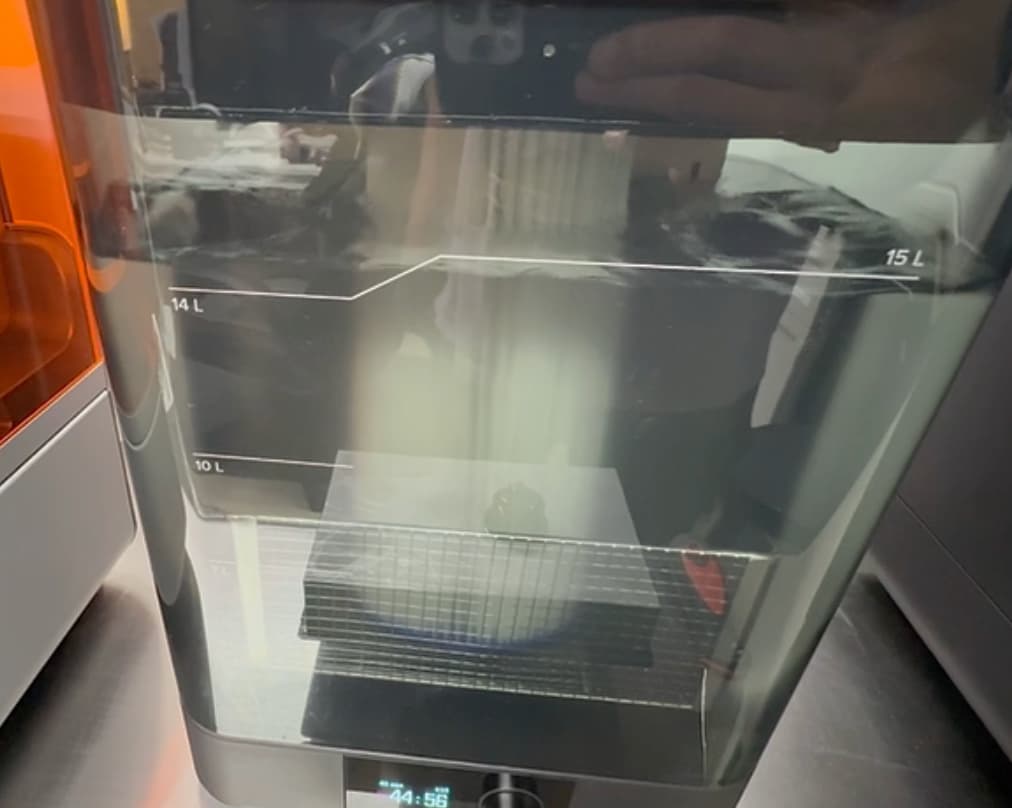
After about 1L of Black V5, my IPA was noticeably darker. I plan on switching to Tough1500v2 later this week and didn’t want the surface to pick up any black residue, so I tossed a clean Prusa cellulose filter in the basket and let it run for 45 minutes. The results were stellar!
Wondering if this is something Formlabs has looked into, perhaps a basket shaped cellulose filter that we can use between resin types/colors to help reduce color contamination?
What do you think of the results??!
A bit blurry in the background, but take notice of the white insulation covering between my form wash and cure, and how dark the IPA is - you can barely see the white behind it.
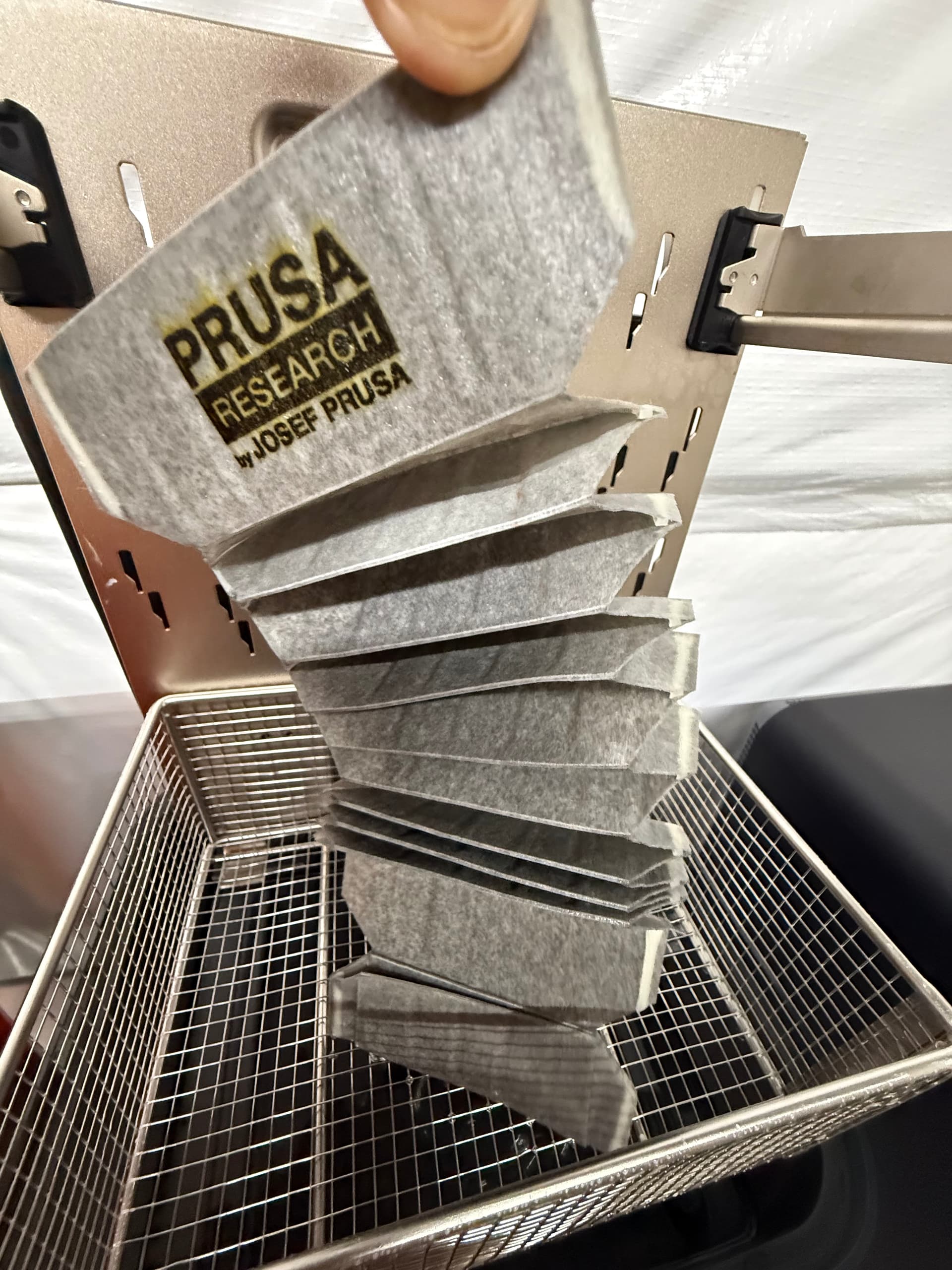
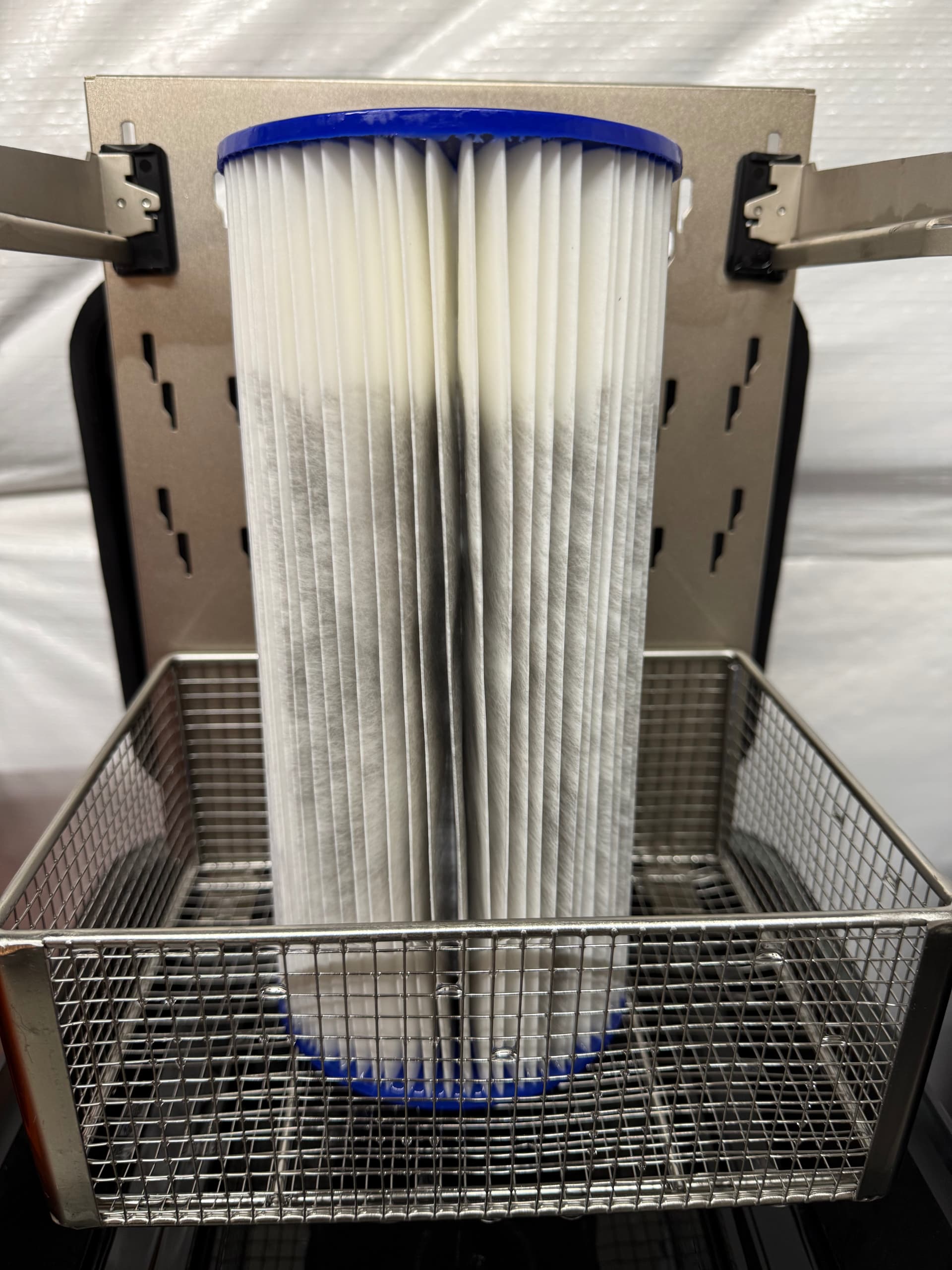
The prusa cellulose filter, normally a white/slight yellow color now a dark gray after soaking up the Black Resin v5 for 2x 45 minute cycles. I just tossed this in the basket, didnt’ try to ‘lay it out’ flat or anything. The turbulence and agitation is enough to move particles through it to get captured.
Oh this is super interesting! I remember seeing these filters in the past but there wasn’t much info on what they actually were useful for nor anyone really talking about them. I will have to get a few of those to try out
It’s impressive how quickly it can clean out the pigments. I think I’m going to look online for some slightly larger filter sets to see how well they perform.
Let me know what you find out! I have a recycling distiller that makes it convenient to recycle IPA, but being able to remove the pigment and particulates in between cycles would be helpful for me since I switch resins so often.
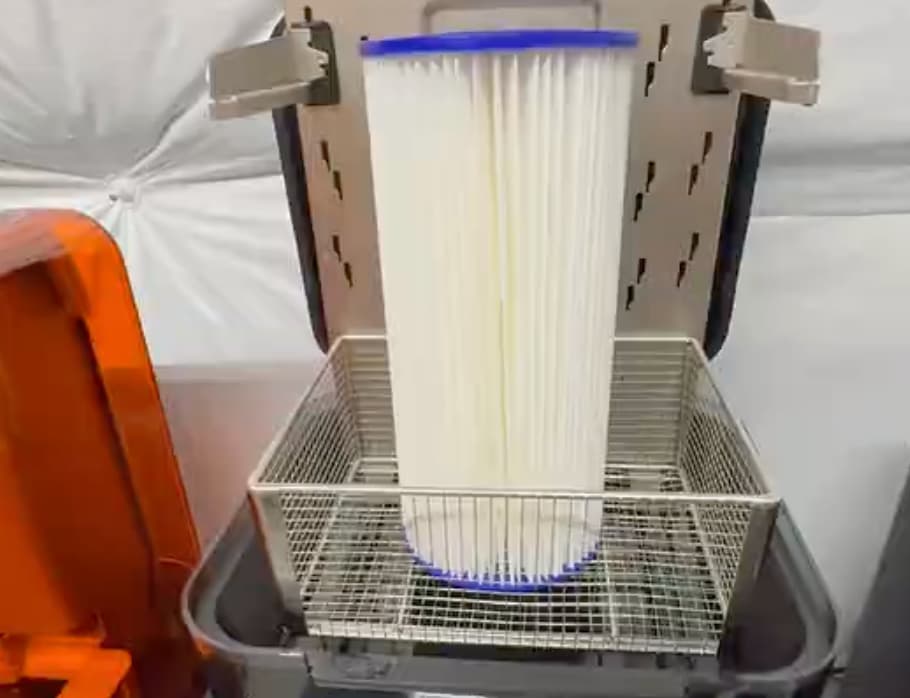
I picked up a simple water filter from Walmart - it’s rated as a ‘course’ filter for sand, rust, and other larger particulate matter. It was able to pick up quite a bit of pigment, as indicated by the pics below. I wonder how well the filtration would be with a filter designed for smaller particles. This filter was only $18USD.
And the after results! I’m curious as to how many cycles this filter will work to remove pigments. Obviously this is not an end all be all solution, but one that could very well extend the life of your IPA.
I have some other filters coming in the mail from Amazon, and will try to find out how it differs in micron filter levels compared to this one. This might be something to do at the end of each week or day depending on how many cycles your form wash has.
It may be a dumb question but : do you see a reduction of the resin saturation in the IPA ?
Does the filter also pickup resin particle floating during the agitation ?
@serret I don’t have a way to test the resin saturation level. It might capture some of the resin, but that was never the goal of testing this - I only wanted to capture the pigments as to not color contaminate prints from other resin colors. Surely FormLabs has a chemist that can crunch some numbers and figure out how much resin gets captured, if any, by filtering the IPA like this.
Excellent tip! I have a second hand solvent recycler but we have yet to test it.
To test the resin saturantion, I would look at the parts coming out and whether they get shiny residue on the surface after air drying (I use a battery powered “air duster” thing from Amazon designed to replace compressed air computer cleaners to blow/dry excess resin from the parts when they come out of the wash 2). My resin is pretty cloudy from Tough 1500 V2 and it does leave some slight shiny contours around areas where the IPA was pooled prior to it evaporating.
I would be particularly keen to find an arrangement where the filter media could be put in the cure station, so I knew I was not putting uncured resin into the waste stream. Most search results for cellulose filters on amazon seem to be small circular lab filter papers. I wonder if coffee filter paper would produce a similar effect, while being cheaper and perhaps easier to post-cure after becoming “saturated”.
Thanks! What brand is the recycler? I’m still doing weekly searches in the hopes that a moderately used one will come up in my area that I can snatch up. What battery powered air blaster are you using? I don’t know what the micron level is for coffee filters, but I can’t imagine that it would pick up much as it’s only designed to stop very large particles like coffee grinds. If you look at the bottom of a coffee cup after a fresh brew, you can see tiny particles - not sure it would help with picking up pigment particles, which are much much smaller. I could be wrong though!
I understand, I would be curious to try in our Form Wash L, maybe the filter would capture resin particles and clean some of the IPA, and then you only have to cure the filter in the sun and toss it.
Formeco Di15 Ax Solvent Recovery System. Was lucky to get it for £1100 in good condition. I agree a desktop unit would be great - it weighs around 70 kg and is their smallest model IIRC! A key feature of ours and probably others is the use of oil, like in an electric oil-filled heater, to prevent hotspots that might create ignition. They are also sealed but not pressurised (using a bag) as far as I can tell. So vapour sealing and room for vapour to increase the volume but remain at atmospheric temperature seem like important features.
Coffee filter paper works great too! I just stuff the parts basket with filters and run the form wash 2nd gen on low for 45 minutes and that does the trick. This does not improve the concentration of the IPA, but does remove the pigmentation and floating sediment that is kicked up from the bottom by the impeller. I’ve been using this trick for years. At some point I want to try a reverse osmosis system to filter the IPA and see how the results turn out since the company I work for makes tankless reverse osmosis systems.
Dude this is awesome! Can you share the link for the parts you actually purchased? I’m battling this right now with residue from White V5 and I could definitely use this.
Very curious how many times one can use it before having to throw it out.
Also, for those asking about measuring resin saturation, you either need a fancy ultrasonic sensor like in the Form Wash L, or you need a hydrometer which measures specific gravity.
Washing resin off has two components to it - 1) chemical where resin gets dissolved by IPA and 2) mechanical where resin gets knocked off by agitation, etc.
Filtering dirty IPA helps with #2 because statistically it increases the chance that resin can get mechanically agitated off and then suspended in the solvent. If the solvent is super dirty then the chances of this happening is less.
To solve saturation of resin in IPA (#1), you have to distill the alcohol. Filtering and UV curing the solvent will not do anything here. This usually just ends up removing suspended pigments or other things that don’t get dissolved by the IPA.
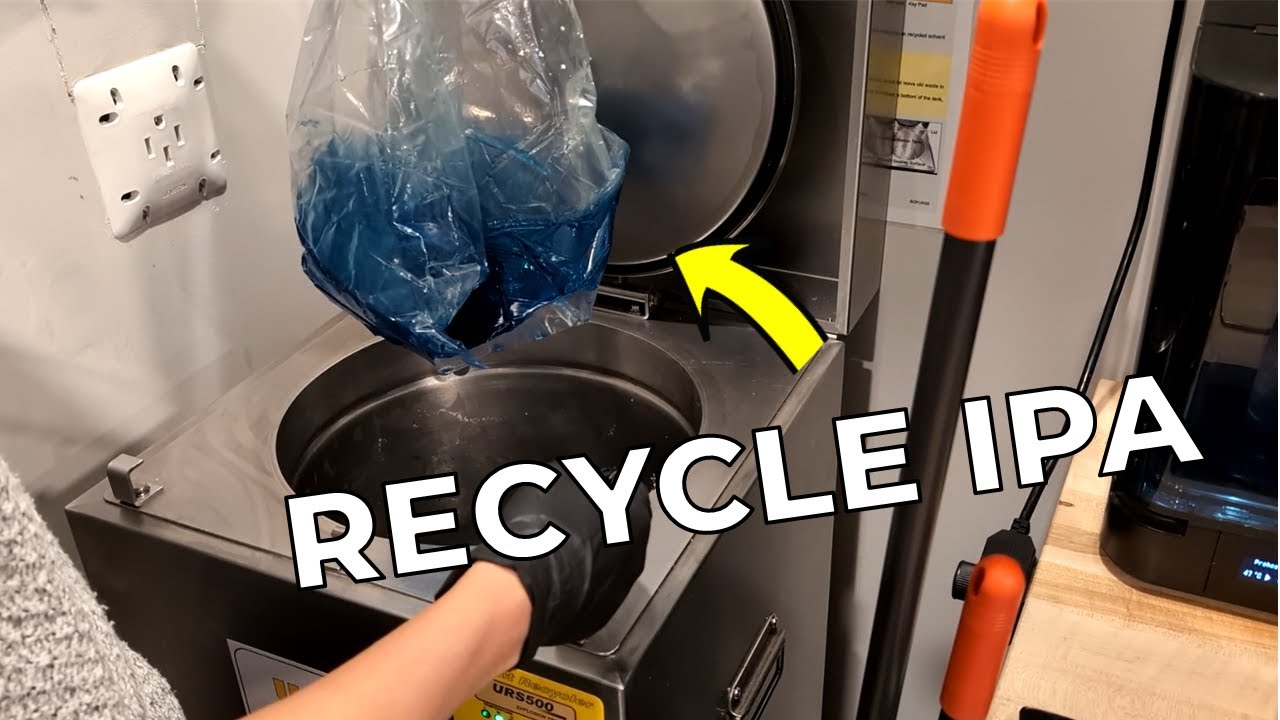
I’ve been meaning to make a deep dive video around this but just haven’t had time (it’s a big lift)…but for those who are curious to see a recycling system in action, or hear a long interview with a material scientist about this, see here:
Thanks! The first filter was just some generic off the shelf at Walmart - doesn’t even list the micron filter level, just ‘coarse’ - whatever that means. I got a 50micron filter in the mail today, smaller diameter than the one I have pictured above. Won’t be printing until later this week, will let the IPA get dirty enough and then I’ll run it again. I think the litmus for # of uses is how long it takes for the cycle of IPA to get clean. After just 3 minutes, huge difference, and 20mins seems to be the sweet spot. I think I’ll add tick marks to the top of the filter to count uses. Obviously saturation level per cycle is gonna have the biggest vote. Be sure to update us all when you use your pool filters.